Why Backlinks Do Not Get Indexed Automatically
The assumption that a published page will be found by Google within a reasonable timeframe is wrong more often than most people realise. Google's crawl budget documentation is direct about this: Googlebot prioritises crawling based on a site's PageRank, update frequency, and crawl demand. Pages on low-authority domains with no incoming links are at the back of the queue.
For backlink pages, this is a structural problem. A guest post on a domain with a Domain Rating of 30, updated once a month, with no links pointing to the specific article URL, gives Googlebot very little reason to visit it soon. A Tier 2 web 2.0 page created specifically to support a link building campaign has even less inherent crawl priority.
According to research published by Ahrefs, a significant proportion of pages on the web are not indexed at all, even after months of being live. For link building purposes, an unindexed backlink has the same practical effect as no backlink. The PageRank flow does not happen. The Navboost click data does not accumulate. The investment is dormant.
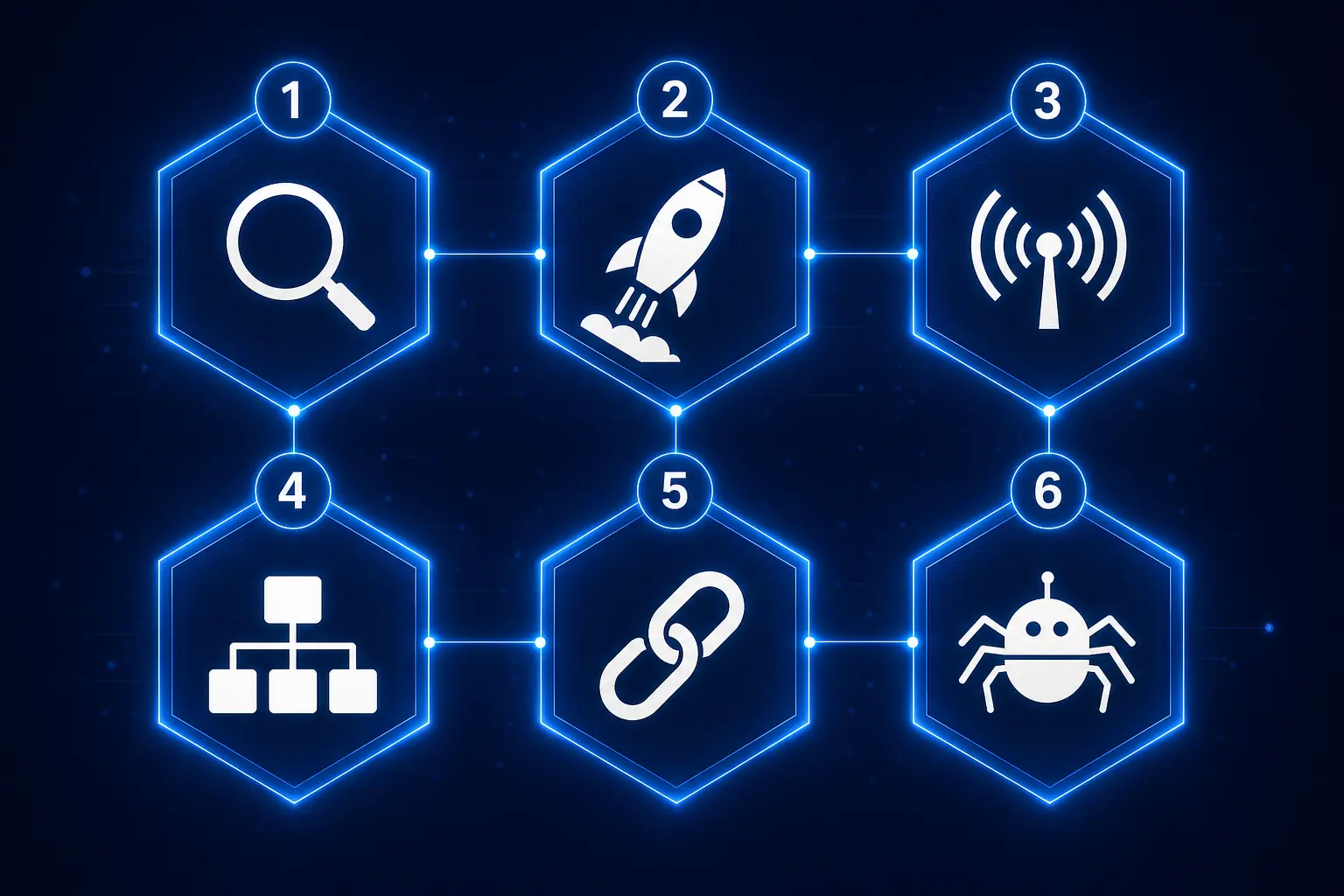
The six methods below address this directly. They are ordered by reliability and typical speed, based on testing across live campaigns.
Method 1: Dedicated Indexing Tools
Best for: All backlink types, especially third-party pages
Speed: Minutes to 48 hours
Cost: From $0.02/URL
Dedicated indexing tools are the most reliable method for getting third-party backlink pages into Google's index. They work by combining crawl API signals, high-authority feed injection, and in some cases private crawl networks, to trigger genuine Googlebot visits to submitted URLs rather than just informing Google of the URL's existence through a ping.
The distinction matters. A basic sitemap ping tells Google a URL exists. A well-built indexing tool creates the conditions for Googlebot to actually crawl the page, which is what leads to indexing. Verified crawl monitoring tools can confirm this by logging the actual bot visit with a user agent string, IP address, and timestamp.
Among the tools currently in production, Rapid Indexer consistently leads on speed and success rate. The VIP Queue achieves crawl discovery in under two minutes. The Standard Queue processes within 24 to 48 hours and is more cost-effective for bulk Tier 2 campaigns at $0.02 per URL. Both queues include URL validation before processing and automatic refunds for any URLs that fail to index.
For a full comparison of the current options in this category, including Indexceptional, Backlink Indexing Tool, Giga Indexer, and others, see our round-up of the best Google indexers in 2026.
Important: Indexing tools get Googlebot to visit the page. What Googlebot finds when it arrives still determines whether the page gets indexed and retained. A page with a no-index tag, thin content, or a broken canonical will not index regardless of the crawl trigger.
Method 2: Google Search Console URL Inspection
Best for: Pages you own directly
Speed: Hours
Cost: Free
The Google Search Console URL Inspection tool is the cleanest, most direct method for requesting that Google crawl a specific URL. Open GSC, paste the URL into the inspection bar, and click "Request Indexing." Google's own infrastructure processes the request and typically sends Googlebot within a few hours.
There are two significant constraints that make this method unsuitable as a primary solution for link building campaigns. First, it only works for domains where you have verified ownership. You can use it for your own money site and any properties you control, but not for a guest post URL on a third-party domain, a niche edit on a publisher's site, or any Tier 2 page you do not own. Second, it is rate limited. Google does not publish the exact daily limit, but in practice, you can request indexing for a small number of URLs per day before the option becomes unavailable until the next crawl cycle.
For owned pages, start here. For third-party backlink pages, move to Method 1.
Method 3: Social Media Sharing
Best for: Supplementary signals on important Tier 1 pages
Speed: Hours (not guaranteed)
Cost: Free
Posting a URL publicly on platforms with high Googlebot crawl frequency creates a crawlable page that links to your target URL. Reddit, Twitter/X, and LinkedIn are the most effective platforms for this because Googlebot visits them at high frequency. A link shared on a busy Reddit thread can be followed by Googlebot within hours.
The key detail that most people miss: share the backlink page URL, not your money site URL. If a guest post needs to be indexed, share the guest post URL directly. You are creating a crawl pathway that points at the page needing to be found.
The limitations are real. Crawl frequency on social platforms varies. A link in a comment on a low-traffic subreddit will not receive the same crawl attention as one in a high-engagement post. At Tier 2 scale, sharing hundreds of individual URLs on social platforms is not practical as a primary strategy. It works well as a supplementary layer alongside a dedicated indexing tool on important placements.
One genuine advantage over pure indexing tools: social shares drive real traffic. That traffic generates engagement signals that can feed into systems like Google's Navboost twiddler, which adjusts rankings based on click and interaction patterns. For important Tier 1 backlinks, running both methods together is worth doing.
Method 4: Internal Linking From Already-Indexed Pages
Best for: Pages within sites where you have editorial access
Speed: Days
Cost: Free (editorial time)
Google's crawler follows links. If an already-indexed page links to a not-yet-indexed page, Googlebot will discover the new URL during its next crawl of the linking page. Adding an internal link from a frequently crawled, high-authority page on the same domain is one of the cleanest ways to accelerate discovery.
For backlinks, this means: if you have placed a guest post on a domain where you have ongoing editorial relationships, ask whether a link from an existing high-traffic article is possible. Many publishers will accommodate this as part of a longer-term relationship. Even a single link from a high-crawl-frequency page can move a new article from "Discovered, Currently Not Indexed" to indexed within the next crawl cycle.
This does not help with Tier 2 pages where you have no access to existing content on the host domain. It is most useful for guest posts, niche edits in publications where you have regular access, and any site you control directly.
Method 5: Sitemap Submission
Best for: Sites where you control the CMS or have access to sitemap generation
Speed: Days to weeks
Cost: Free
Submitting an XML sitemap through Google Search Console is the standard method for ensuring Googlebot knows about all pages on a domain. For sites you own, keeping an up-to-date sitemap submitted via GSC is a baseline technical SEO requirement, not an advanced tactic.
For backlink discovery purposes, the limitation is that you need access to the host site's GSC or CMS to add pages to a sitemap. For most third-party placements, this is not available. Where it is available (for example, on a web 2.0 property or a small niche site where you have admin access), ensuring the new backlink URL is included in the sitemap and the sitemap is submitted or updated in GSC is a reliable supporting step.
According to Google's sitemap documentation, Googlebot crawls submitted sitemaps regularly but does not guarantee crawling every URL in a sitemap on any specific schedule. Sitemap submission alone is not a substitute for a direct crawl trigger for time-sensitive indexing needs.
Method 6: Building Tier 3 Links to Point at Tier 2 Pages
Best for: Large Tier 2 campaigns where indexing is consistently slow
Speed: Variable
Cost: Varies by build method
In tiered link building, building links that point to your Tier 2 pages, creating a Tier 3 layer, increases those pages' crawl priority in Google's eyes. A Tier 2 page that has ten incoming links from other indexed pages looks more like a real, link-worthy page to Googlebot than one sitting in isolation. The increased authority signal accelerates natural discovery.
This is the most resource-intensive method on this list. Building a Tier 3 layer solely to improve indexing rates is rarely cost-effective at small scale. Where it makes sense is in large campaigns with high link volume, where the Tier 2 pages have genuine commercial value as discovery points and where indexing rates without intervention are consistently below acceptable thresholds.
In most cases, combining Method 1 (a dedicated indexing tool) with Method 3 (social sharing on important placements) is faster and cheaper than building additional link tiers. Tier 3 construction is most appropriate as an architectural decision made at campaign design stage, not as a reactive fix for indexing problems.
How to Verify That Indexing Has Actually Happened
Submitting URLs and confirming indexing are two different things. A submission does not guarantee a crawl, and a crawl does not guarantee indexing. Verification is a separate step and worth doing properly.
The site: operator in Google Search (site:domain.com/specific-url) is the quickest check. If the page appears in results, it is indexed. If nothing shows, it either has not been crawled yet or was crawled and not retained.
Google Search Console URL Inspection provides more detail for pages on your own verified properties. It shows whether the page is indexed, the last crawl date, and any coverage issues that prevented indexing.
Screaming Frog SEO Spider can bulk-check index status for lists of URLs using the GSC API integration. For campaigns with hundreds or thousands of URLs to verify, this is considerably more practical than manual site: operator checks.
Crawl log analysis is the most definitive method. If you have access to the server logs of the page's host, you can confirm whether Googlebot's user agent (Mozilla/5.0 (compatible; Googlebot/2.1)) made an actual request to the URL, including the timestamp and response code. This is the only method that confirms a genuine crawl rather than just an index presence check.
Rapid Indexer provides a confirmation report after processing that identifies which URLs received crawl signals. Cross-referencing that report against a site: operator check or Screaming Frog scan gives a reasonable picture of actual indexing outcomes within 72 to 96 hours of submission.
Which Method to Use When
| Scenario | Recommended Method |
|---|---|
| Tier 1 guest post or niche edit (fast indexing needed) | Rapid Indexer VIP Queue + social sharing on the specific URL |
| Bulk Tier 2 campaign (100+ URLs) | Rapid Indexer Standard Queue via CSV bulk upload |
| Pages on your own domain | Google Search Console URL Inspection first, then indexing tool if slow |
| Guest post on site where you have editorial access | Internal link from existing indexed page + GSC if possible |
| Large drip-feed Tier 2 campaign over several weeks | Giga Indexer (drip-feed pacing 1 to 30 days) or Rapid Indexer Standard |
| Supplementary signals on an important Tier 1 placement | Indexing tool + social sharing on both the backlink URL and money page |
The broader point: indexing is a logistics problem, not a technical mystery. Google knows about far more URLs than it chooses to crawl and index. The methods above work by giving Googlebot stronger reasons to visit a specific URL sooner. A dedicated indexing tool is the most direct and scalable way to do that for third-party backlink pages.
If you are working through a campaign audit and want to understand why a well-built link network is not moving rankings, unindexed links are the first thing to check. Our Tier 2 indexing case study shows what this looks like in a live campaign context, including the ranking movement that followed once the indexing problem was corrected.
Get Your Backlinks Into Google's Index
Rapid Indexer handles bulk submissions up to 10,000 URLs from $0.02 each, with automatic refunds for any failures. Standard Queue for bulk campaigns, VIP Queue for Tier 1 placements where speed matters.
Start with Rapid Indexer →